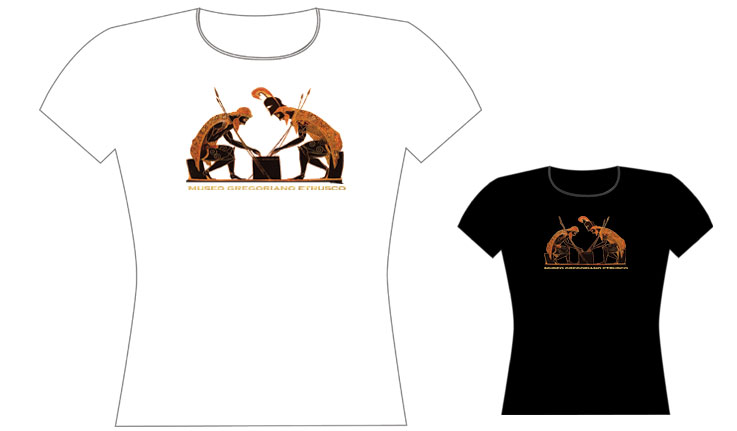
cotton 100%

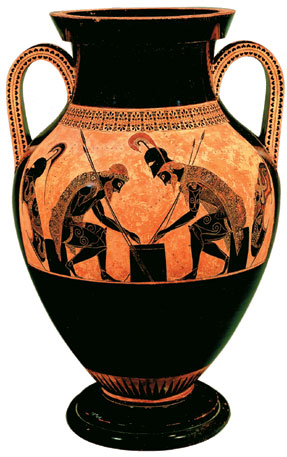
Exechìas, Amphora from Attica with black figures, circa 540-530 B.C., ceramic, The Gregorian Etruscan Museum, Vatican Museums.
This celebrated work was created by Exechìas,
the important painter and ceramic artist, who was active in Greece from
550 to 525 B.C.. The amphora, which can certainly
be included among the greatest masterpieces of the artist and Attic ceramic
production in general, was created using the black figure technique on
a red background and bears the illustration of an episode foreign to the
tradition of the poems of Homer: the two heroes, Achilles and Ajax, intent
on playing dice.
During the siege of Troy, Achilles had left the battle as he was offended
by the abuse of power on the part of Agamemnon, the supreme commander
of the Greeks, who had taken his slave, Briseide, away from him. Refusing
to take part in the battle, Achilles spent his time playing with Ajax,
his faithful companion.
With the typical solemnity of his style, the ceramist captures the moment
when the two heroes, having temporarily laid down their arms during the
long siege of Troy,
devote themselves to play.
Exekias, Anfora attica a figure nere,
540-530 a.C. circa, ceramica, Museo Gregoriano Etrusco, Musei Vaticani.
Questa celebre anfora fu realizzata dal grande pittore
e ceramografo Exechias, attivo in Grecia tra il 550 e il 525 a.C.
L’anfora, che a buon titolo può annoverarsi fra i capolavori
dell’artista e della ceramografia attica in genere, è stata
realizzata con la tecnica delle figure nere su fondo rosso e rappresenta
un episodio estraneo alla tradizione omerica, ovvero i due eroi Achille
ed Aiace intenti a giocare a dadi.
Il pittore coglie il momento in cui, deposte temporaneamente le armi,
i due eroi greci si abbandonano a un’attività ludica: la
rappresentazione, nell’apparente calma dell’aneddoto, si carica
della tragicità degli eventi futuri.
Achille e Aiace, seduti su bassi sostegni, si curvano e protendono le
destre nel verificare il punteggio realizzato nel gioco, rispettivamente
quattro e tre, come si legge nelle iscrizioni che sembrano fuoriuscire
a mo’ di fumetto dalle loro bocche.